
THE HEAD of Britain's fiscal watchdog resigned on Monday after the agency inadvertently released key details of the government's annual tax and spending budget before chancellor Rachel Reeves presented them in parliament.
Richard Hughes stepped down shortly after the Office for Budget Responsibility (OBR) said in a report that the lapse on 26 November appeared to have also happened with a similar fiscal report earlier this year.
Reuters, which first published details of the OBR's report last week, had also published parts of the March budget update report when it became accessible online ahead of its official release, while Reeves was still delivering her speech to parliament.
The early release of details of 26 billion pounds in tax increases and the OBR's economic forecasts prompted criticism from some lawmakers.
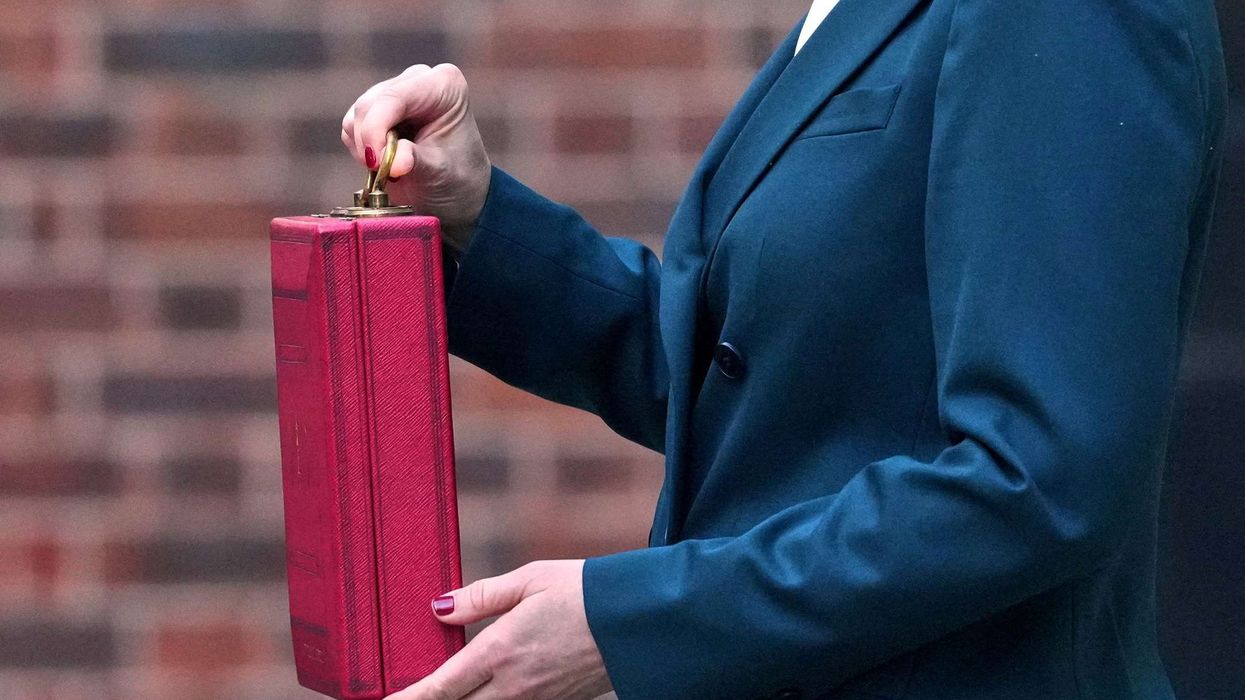
Reeves opened her budget speech by calling the lapse "deeply disappointing" and a serious error by the OBR.
Hughes said in his resignation letter that he accepted responsibility for the shortcomings highlighted in the investigation. "I have, therefore, decided it is in the best interest of the OBR for me to resign as its chair," he said in a letter to Reeves.
Hughes began his first five-year term as chair in 2020, before Reeves backed him for a second term in May. His departure comes after a period of strained relations between Reeves and the OBR.
On Sunday, Reeves rejected suggestions she had misled the public about the state of Britain's public finances in the run-up to the budget after the OBR disclosed when it informed her that its forecasts were not as bad as feared.
FAILINGS OF TECH AND LEADERSHIP
The OBR said earlier on Monday that last week's early publication of its assessment of Reeves' budget was due to existing IT problems that the agency's leadership had not identified.
The inquiry found the weakness likely pre-dated the budget, and the OBR said it would improve its systems to avoid a repeat.
The pound and British government bond prices rose following the Reuters alerts last week.
The OBR report said: "We note however that those who secured early premature access did, at least, disseminate it quickly and widely, through the use of such mechanisms as Reuters alerts, rather than keep it for their private advantage."
In both March and last week, the links to the reports were not advertised on the OBR website.
The OBR had used the same URL for previous budget documents, changing only the date. On both occasions, the report was uploaded and available to download through an unprotected link.
In March, a Reuters reporter viewed the report while Reeves was presenting her half-yearly budget update.
The OBR's reports are meant to be published only after the finance minister finishes speaking. In March, Reuters issued alerts, citing the OBR, about 25 minutes before Reeves completed her speech.
The OBR and the Treasury did not comment on the early publication of the March report or Reuters' reporting of it.
Last week, the OBR’s Economic and Fiscal Outlook report became accessible on its website just under an hour before Reeves began her budget speech at around 1230 GMT. The Reuters reporter preparing to cover the budget checked the publicly accessible URL shortly after 1130 GMT.
"We are in no doubt that this failure to protect information prior to publication has inflicted heavy damage on the OBR's reputation," two of its non-executive directors said in a foreword to Monday's publication of the investigation results. "It is the worst failure in the 15-year history of the OBR," they said.
The investigation found 32 unique IP addresses attempted to access the report between 1135 GMT and 1207 GMT.
The OBR, which apologised on the day, appointed Ciaran Martin, a former head of the National Cyber Security Centre, to investigate the failure.
The findings said all those involved in preparing the EFO believed protections were in place, but they were not. "The outcome was that the protections did not work," it said.
"The ultimate responsibility for the circumstances in which this vulnerability occurred and was then exposed rests, over the years, with the leadership of the OBR," the non-executive directors said.
Martin described the publishing process as a "well-planned but significantly underpowered operation".
The non-executive directors said responsibility for addressing this lay with the OBR's leadership, the Treasury and the Cabinet Office.
(With inputs from agencies)